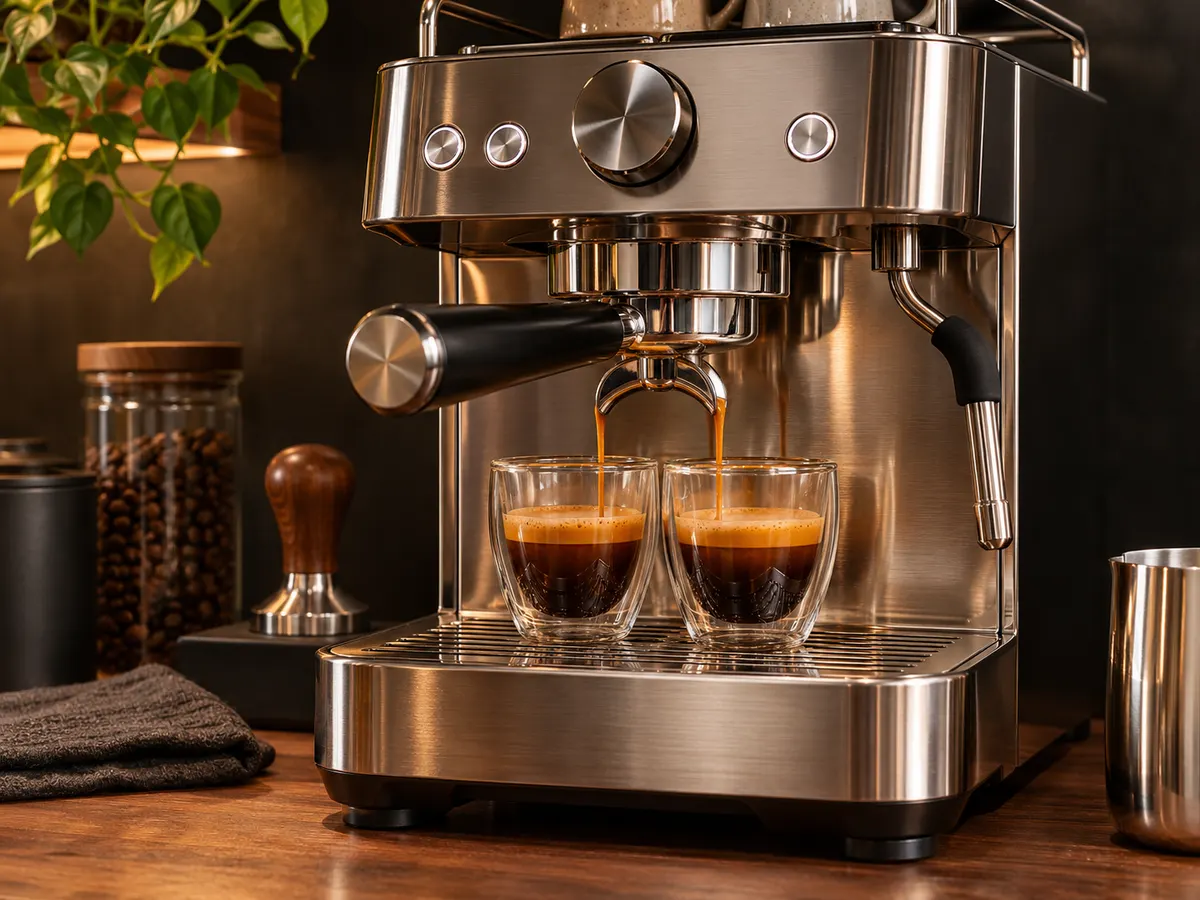
Dialing in espresso means finding a recipe that tastes good with your coffee, grinder, and machine. It sounds technical, but it is mostly a series of small, careful decisions. You pick a dose, measure the liquid yield, taste the shot, and adjust one variable. The aim is not to meet a magical extraction time; it is to make a cup you enjoy reliably.
Start with a practical ratio
If your basket comfortably holds 18 g of coffee, try an initial shot with 18 g in and 36 g of espresso out. That's a 1:2 brew ratio, a common espresso starting point. Your basket may require a different dose. Don't overfill it; follow your machine and basket guidance, and distribute and tamp the grounds consistently.
Watch flow, but taste first
An initial target of roughly 25–35 seconds can help you establish whether the grind is in a reasonable range, measured consistently from pump activation. A very fast shot may suggest the grind is too coarse or that water is finding easy channels through the puck. A painfully slow shot may mean the grind is too fine. Neither observation replaces tasting.
Adjust grind before changing everything
Keep your dose and target yield stable for the first few shots. If the espresso is sharply sour, thin, and runs quickly, try grinding a little finer. If it is intensely bitter, drying, and runs very slowly, try going coarser. Purge a little coffee after a grind change if your grinder retains old grounds. Give your palate a break between repeated shots.
When to change the yield
Once the grind is close, a shorter yield can increase concentration and body; a longer yield may open up clarity and sweetness for some coffees while reducing perceived intensity. If the espresso tastes balanced but too strong, try a little more liquid. If the cup tastes diluted, shorten it slightly. Write down what worked.
Reduce avoidable inconsistency
- Warm the machine and portafilter according to manufacturer guidance.
- Weigh each dose instead of estimating by sight.
- Distribute grounds evenly before tamping with level, consistent pressure.
- Use freshly roasted beans that have had a sensible resting period.
- Clean the basket, group area, and grinder at appropriate intervals.
Know when to stop
Some coffees naturally favor brightness, others chocolatey sweetness. Don't try to force every roast into the same flavor. Stop adjusting when you have a drink that tastes good and can be repeated. The perfect shot is not the one with the most impressive numbers; it is the one you're happy to make again tomorrow.
Our guides are educational and aim to help you make informed decisions. For information on how content is prepared, see our editorial policy. Have a correction? Get in touch.