A grinder shapes almost every cup you brew. It controls particle size, and particle size helps determine how quickly coffee compounds dissolve in water. The choice between a hand grinder and an electric grinder is less about one being universally better and more about your mornings, brewing method, and willingness to spend time on preparation.
What manual grinders do well
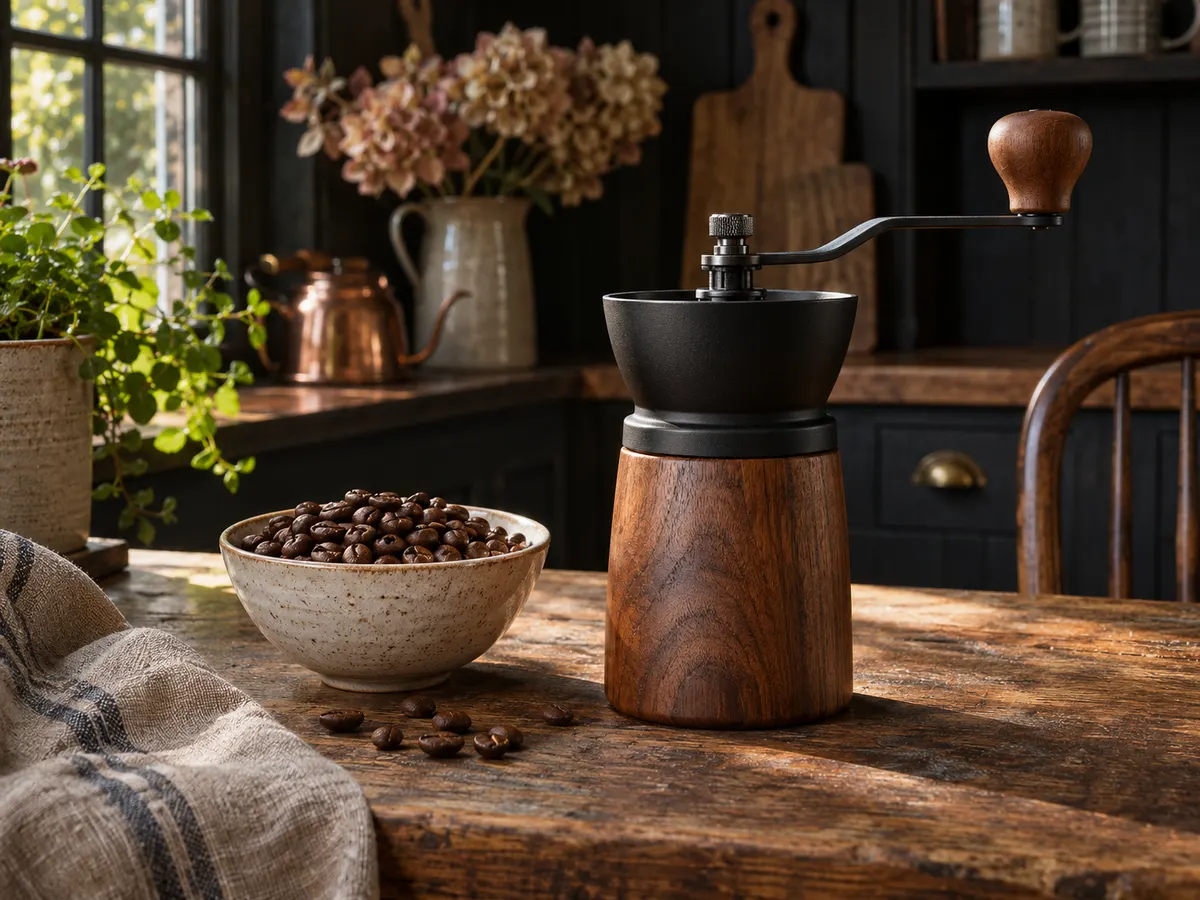
Modern hand grinders can be impressively precise, and a well-designed burr set can produce consistent grounds for pour-over, AeroPress-style immersion, and French press. They are portable, usually quiet, occupy little counter space, and don't need an outlet. They can also offer strong grinding performance at a given budget because you're paying less for a motor and electronics.
The compromise is effort. Grinding one small dose is manageable for many people. Grinding enough for several guests, especially at fine espresso settings, can become tedious. Some small models are difficult to grip, so comfort matters just as much as burr specifications.
When electric makes more sense
Electric burr grinders save time and make larger batches more practical. They are especially useful in a household preparing several drinks every day. Look for accessible grind adjustment, reasonable grounds retention, replacement parts, and a way to clean the burr chamber. A timed dose sounds convenient, but a scale can give more repeatable results when beans or grind sizes change.
Expect trade-offs: electric grinders are usually louder, need counter space, and can cost more for comparable grinding performance. Very cheap electric blade grinders chop rather than grind evenly and are usually a poor choice when you're trying to improve consistency.
Match the grinder to how you brew
- Pour-over and batch filter: prioritize even particles, low mess, and easy adjustments between medium and medium-fine.
- French press: look for a stable medium-coarse setting rather than the largest possible burrs.
- Espresso: demand fine, precise adjustment. Not every grinder advertised as “espresso capable” offers enough usable control.
- Travel: prioritize a light, sturdy hand grinder that fits your brewer and coffee dose.
Five checks before you buy
First, choose a true burr mechanism. Second, confirm that the grinder's adjustment range covers your preferred brew. Third, read the cleaning instructions, because coffee oils and fines accumulate. Fourth, consider how much coffee you grind each day. Fifth, check whether the manufacturer sells spare burrs and other parts. These practical factors frequently matter more than marketing around burr diameter.
Our decision rule
If you brew one or two filter cups, enjoy a slow morning, and want a compact setup, start with a capable hand grinder. If you make several drinks, brew espresso regularly, or share coffee with a family, a dependable electric burr grinder is likely to fit better. Neither choice replaces good beans, sensible water, or a repeatable recipe.
Our guides are educational and aim to help you make informed decisions. For information on how content is prepared, see our editorial policy. Have a correction? Get in touch.