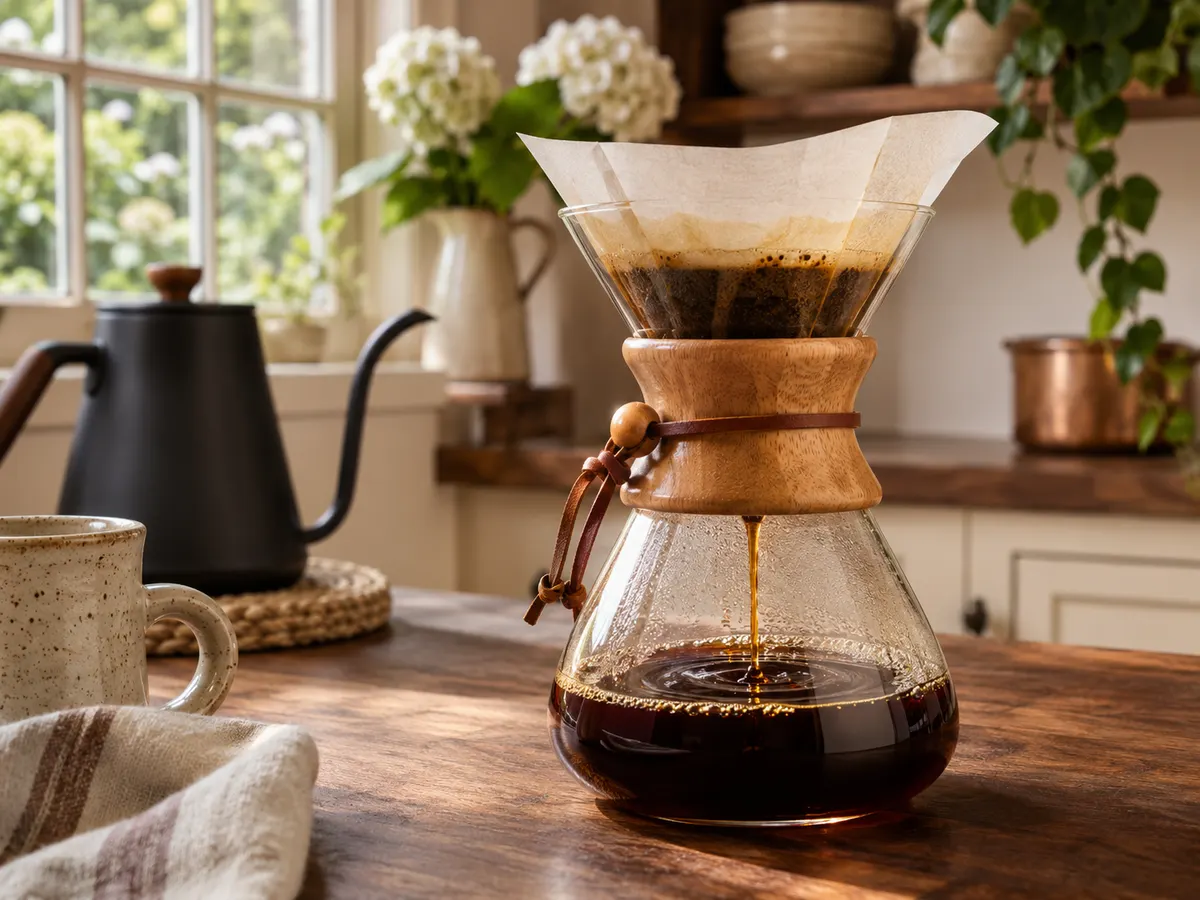
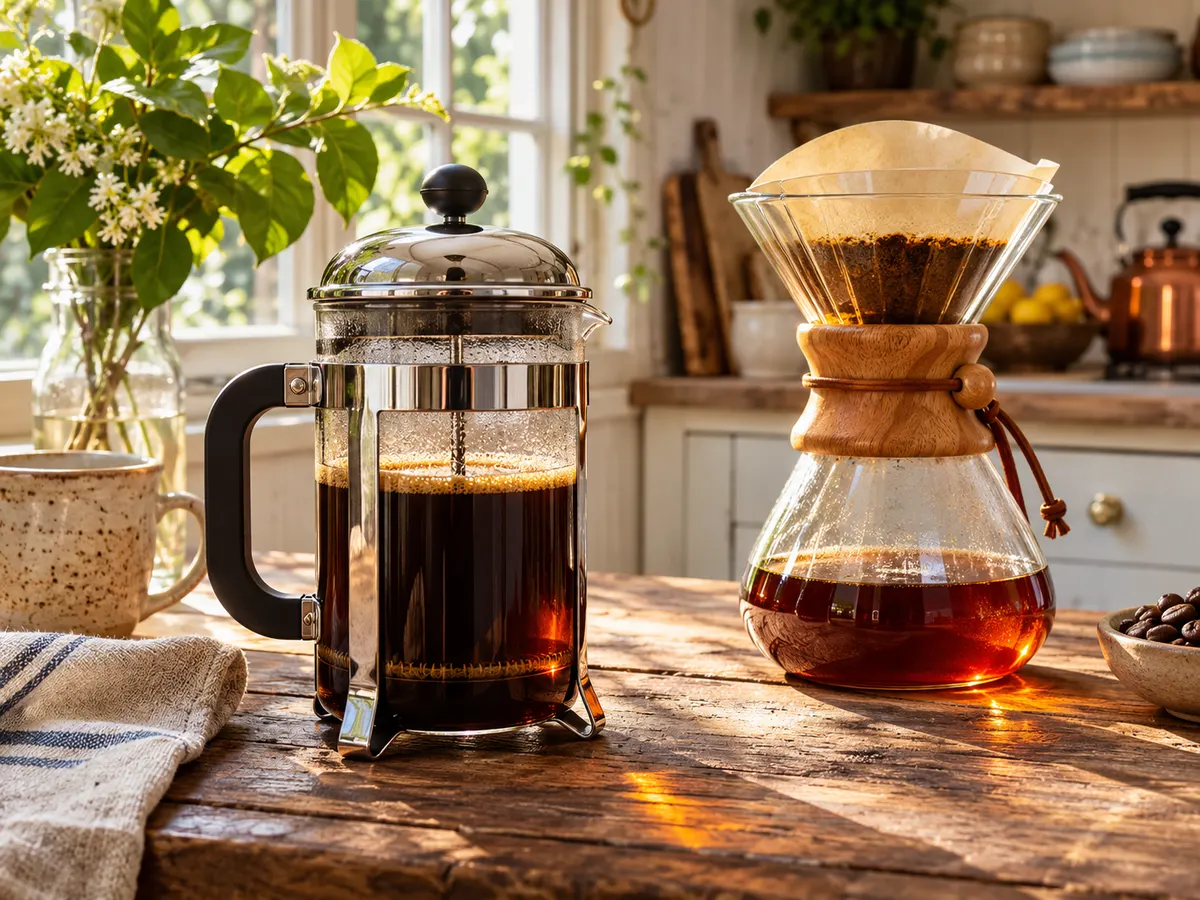
The French press and pour-over both turn ground coffee and hot water into an enjoyable drink, but they use different extraction and filtration methods. A French press immerses the grounds in water and separates them with a metal mesh. Pour-over sends water through a bed of grounds and usually through paper. The difference is immediately noticeable in texture.
Flavor and mouthfeel
French press often produces a fuller, heavier-feeling cup because fine particles and coffee oils can pass through the mesh. Many people enjoy its rounded texture. Paper-filtered pour-over commonly tastes cleaner and lighter, helping subtle acidity and aromatic details stand out. Neither texture is objectively better; both can express the same beans in different ways.
Ease of use in a busy morning
French press is forgiving when you want to brew several cups with little active pouring. Add coffee and water, wait, gently plunge or decant, and serve. Pour-over asks for more attention during the brew, especially when you are learning how to pour evenly. Once you establish a recipe, the work can feel pleasantly meditative rather than demanding.
Starter recipes
For French press, try 30 g of medium-coarse coffee with 450 g of hot water. Stir gently, steep about four minutes, then press slowly and decant the coffee rather than leaving it sitting on the grounds. For pour-over, try 16 g of medium-fine coffee to 250 g of water, blooming first and finishing with gentle pours. Adjust according to taste and coffee strength preference.
Cleanup and ongoing costs
Pour-over usually creates a neat bundle of grounds inside the filter, but paper filters are an ongoing purchase. A French press avoids disposable paper, yet its mesh and glass vessel need more scrubbing. Check whether your preferred brewer is easy to disassemble, wash, and replace if a part breaks. Both methods can be inexpensive compared with electric machines.
Which one should you choose?
- Choose French press for a full-bodied cup, minimal pouring, and brewing larger batches without paper filters.
- Choose pour-over for a cleaner cup, greater control over the brew, and an enjoyable hands-on routine.
- Try both if you love exploring coffee. Even an inexpensive dripper and basic press can reveal how much filtration affects flavor.
Whichever you prefer, start with fresh beans, consistent grinding, and reasonable water quality. Those factors matter more than a perfect-looking brewing station.
Our guides are educational and aim to help you make informed decisions. For information on how content is prepared, see our editorial policy. Have a correction? Get in touch.